


In scenarios such as cross-border e-commerce, overseas social media operations, and ad testing, proxy IPs have become an important tool for many teams conducting overseas business.
However, many users encounter similar problems when using proxies: the proxy IP can connect normally, yet the account frequently triggers verification; the IP shows the target country, but the platform still reports an abnormal environment.
The root cause of these problems is often not whether the proxy "can be used," but whether this proxy IP meets the conditions for long-term stable use.
This article will introduce what proxy IP purity is, how to detect proxy IP quality, and why relying solely on proxy IPs is not enough—a fingerprint browser is also needed to establish a complete account environment.
What Is Proxy IP Purity?
Proxy IP purity, simply put, is a metric for determining whether an IP address has a stable and trustworthy network environment.
A high-quality proxy IP usually has the following characteristics:
- The IP history is normal, with no obvious risky behavior;
- The IP location is consistent with the target market;
- The network type meets usage requirements;
- There are no obvious proxy nodes or abnormal access records.
It should be noted that IP purity is not an absolute standard.
The same IP may be judged completely differently in terms of risk under different business scenarios.
For example:
- A data center IP suitable for web browsing may not be suitable for long-term Amazon account operations;
- A proxy suitable for data collection is not necessarily suitable for social media account management.
Therefore, when choosing a proxy IP, you should not only look at "whether it can be accessed"; you also need to make a judgment based on the actual business scenario.
II. What risks does poor proxy IP quality bring?
Many users believe:
"As long as the proxy IP can access the target website, it means there is no problem with the proxy."
In fact, for overseas platform account operations, platforms consider multiple factors when assessing the environment.
1. IP history affects account stability
Some proxy IPs may have been used by a large number of users in the past. If the following occurred in the past:
- Bulk registration;
- Abnormal access;
- Spam sending;
- Frequent account switching;
These behaviors may leave risk records on the IP. Even if the current IP can be accessed normally, it may still affect subsequent account operations.
2. Inaccurate IP location causes environmental abnormalities
Many overseas businesses need to match the target market environment. For example:
- U.S. Amazon accounts require stable use of a U.S. network environment;
- UK YouTube accounts need to maintain UK-region access characteristics.
If the proxy shows a US IP, but the actual carrier, ASN information, or network type has obvious anomalies, it may cause the platform to reassess the current environment.
3. IP Type Not Suitable for Business Needs
Currently, common proxy types mainly include: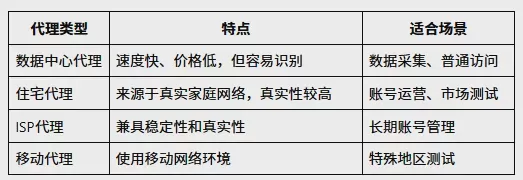
For account operation scenarios such as Amazon, YouTube, and TikTok, IP stability and authenticity are usually more important, so residential proxies or ISP proxies are often more suitable.
III. How to Detect Proxy IP Quality? 4 Steps to Determine Whether an IP Is Reliable
After selecting a proxy, it is not advisable to use it directly for account operations. The following steps can help you determine in advance whether the proxy IP meets your needs.
Step One: Query basic IP information
First, you need to confirm the basic information of the proxy IP. Common checks include:
- Country and region;
- City location;
- ASN information;
- ISP;
- Network type.
Common tools:
- IPinfo
- WhatIsMyIP

- IP138

For example, after purchasing a US residential proxy, you can use an IP lookup tool to confirm:
- Whether the IP actually belongs to the United States;
- Whether the associated carrier matches residential network characteristics;
- Whether it shows obvious data center proxy information.
If the detection results are inconsistent with the purchase information, it should be used with caution.
Second step: Check the IP risk score and blacklist records
The fact that an IP can access a website does not mean it is risk-free. Many proxy IPs may already be recorded in risk databases.
You can check with the following tools:
- Scamalytics

- IPQualityScore (IPQS)
Key items to check:
- Fraud Score (risk score);
- Whether it is flagged as a VPN;
- Whether proxy records exist;
- Whether it has been blacklisted.
If an IP shows high risk on multiple detection platforms, has a large amount of abnormal historical records, or is flagged as a proxy node, it is not recommended for long-term account operation.
Step Three: Check Whether DNS and WebRTC Are Leaking
Many users believe that "changing the proxy IP is equivalent to hiding the real environment." However, other factors in the browser environment may expose real network information. The more common ones are DNS leaks and WebRTC leaks.
What is a DNS leak?
Under normal circumstances, when users visit a website, the domain name needs to be resolved through a DNS server. If the proxy has already been switched, but DNS requests are still sent through the local network, the real network location may be exposed.
What is a WebRTC leak?
WebRTC is a real-time communication technology in browsers. In some cases, even when a proxy is used, the browser may still obtain the real IP address through WebRTC.
Detection tool: BrowserLeaks WebRTC Test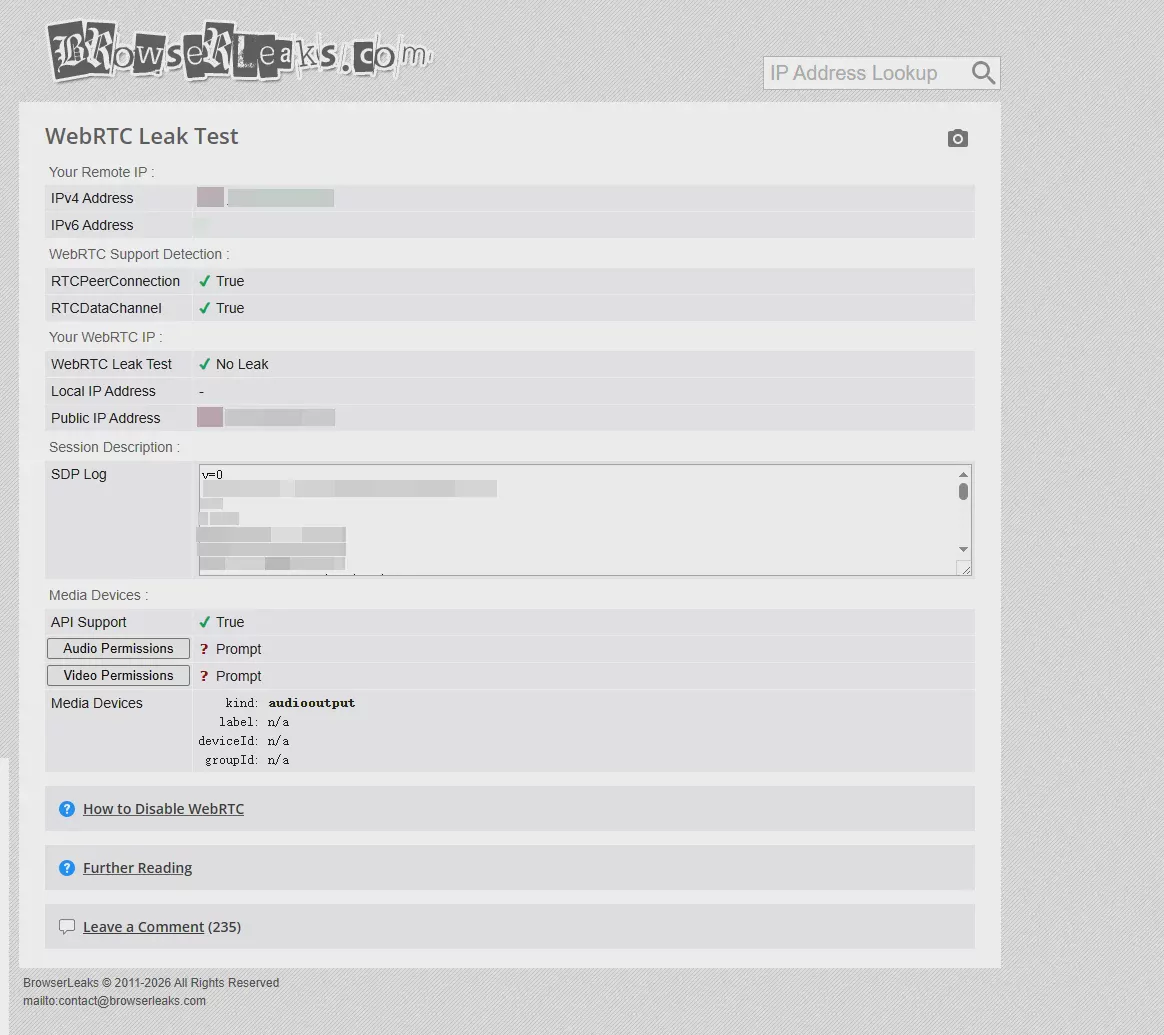
Key focus areas during detection:
- Key points to focus on during detection:
- Whether a real IP address appears;
- Whether the DNS server location is abnormal;
Whether the browser environment matches the proxy region.
Step Four: Test Proxy Stability
In addition to IP information and risk records, you also need to test long-term stability. Focus on:
- Connection success rate;
- Network latency;
- Whether the IP changes frequently;
- Whether it remains stable during long-term operation.
Many proxies test fast the first time, but during long-term operation they frequently drop connections or change exit IPs. For account operation scenarios, stability is usually more important than pure speed.
IV. How to Choose Proxy IPs for Different Business Scenarios?
Different businesses have different requirements for proxy IPs.
Amazon cross-border e-commerce accounts
Amazon account operation focuses more on:
- Stable IP region;
- Consistent login environment;
- Matching browser environment.
For example: a US site account uses a US proxy environment long-term; a European site account maintains a network environment for the corresponding country. If an account frequently logs in from different countries or switches between different network environments, it may increase the probability of the platform requiring re-verification.
Overseas content operations for YouTube, TikTok, etc.
Content teams usually need to manage multiple accounts. For example: testing channels in different countries, operating different content directions, and analyzing data for different accounts. These scenarios focus more on:
- IP stability;
- Regional authenticity;
- Multi-account environment isolation.
Ad testing and market analysis
Ad teams usually need to simulate user environments in different regions. Key focus areas:
- IP coverage;
- Regional accuracy;
- Data access stability.
Why, after proxy IP detection, do you still need to manage the account environment?
After completing proxy detection, many users believe:
"Once a clean IP is found, you can safely operate accounts."
However, in reality, IP is only one factor in the account environment. Overseas platforms usually make comprehensive judgments based on:
- IP address;
- Browser fingerprint;
- Device information;
- Cookie data;
- System language;
- Time zone settings.
In other words:
Proxy IPs address network environment issues, while fingerprint browsers address the complete browsing environment.
If multiple accounts share the same browser environment, even if different proxies are used, there may still be an issue of environment information being linked.
Six. How does P1 help manage proxy IPs and account environments?
When a team operates multiple overseas accounts, it usually needs to establish independent environments for different accounts.
For example:
- U.S. Amazon accounts use U.S. proxy IPs;
- European YouTube accounts use European regional networks;
- Different brand accounts conduct market testing separately.
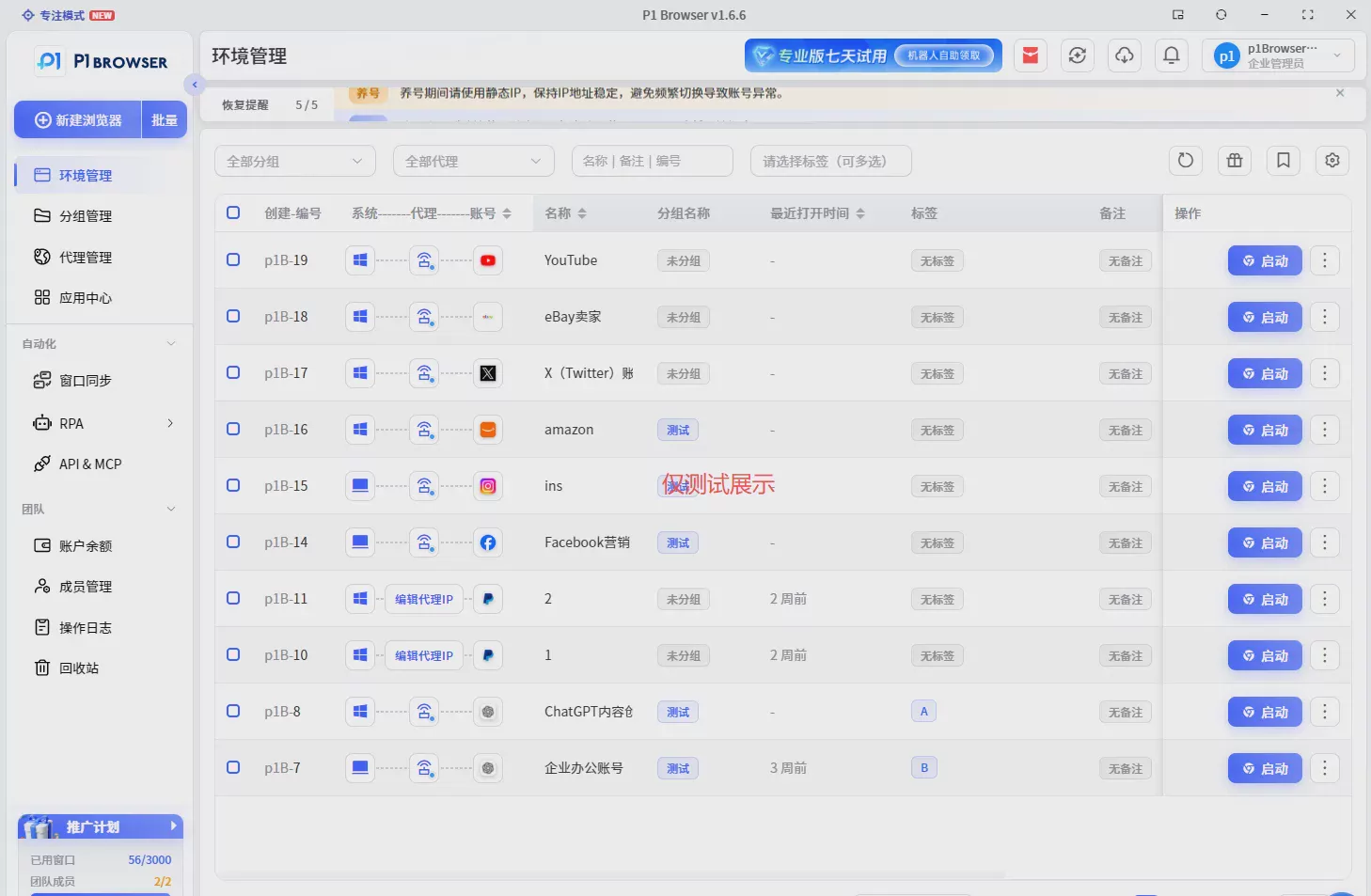
P1 Fingerprint BrowserIt can help users create independent browsing environments and manage:
Environment Isolation
Each browser window has independent cookies, local storage, and configuration profiles, with no sharing between them, fundamentally blocking the risk of account environment association.
Proxy and Fingerprint Configuration
Supports binding an independent proxy IP to each environment, while visually configuring browser fingerprint parameters such as language, time zone, and resolution, ensuring the network environment and browser environment remain consistent.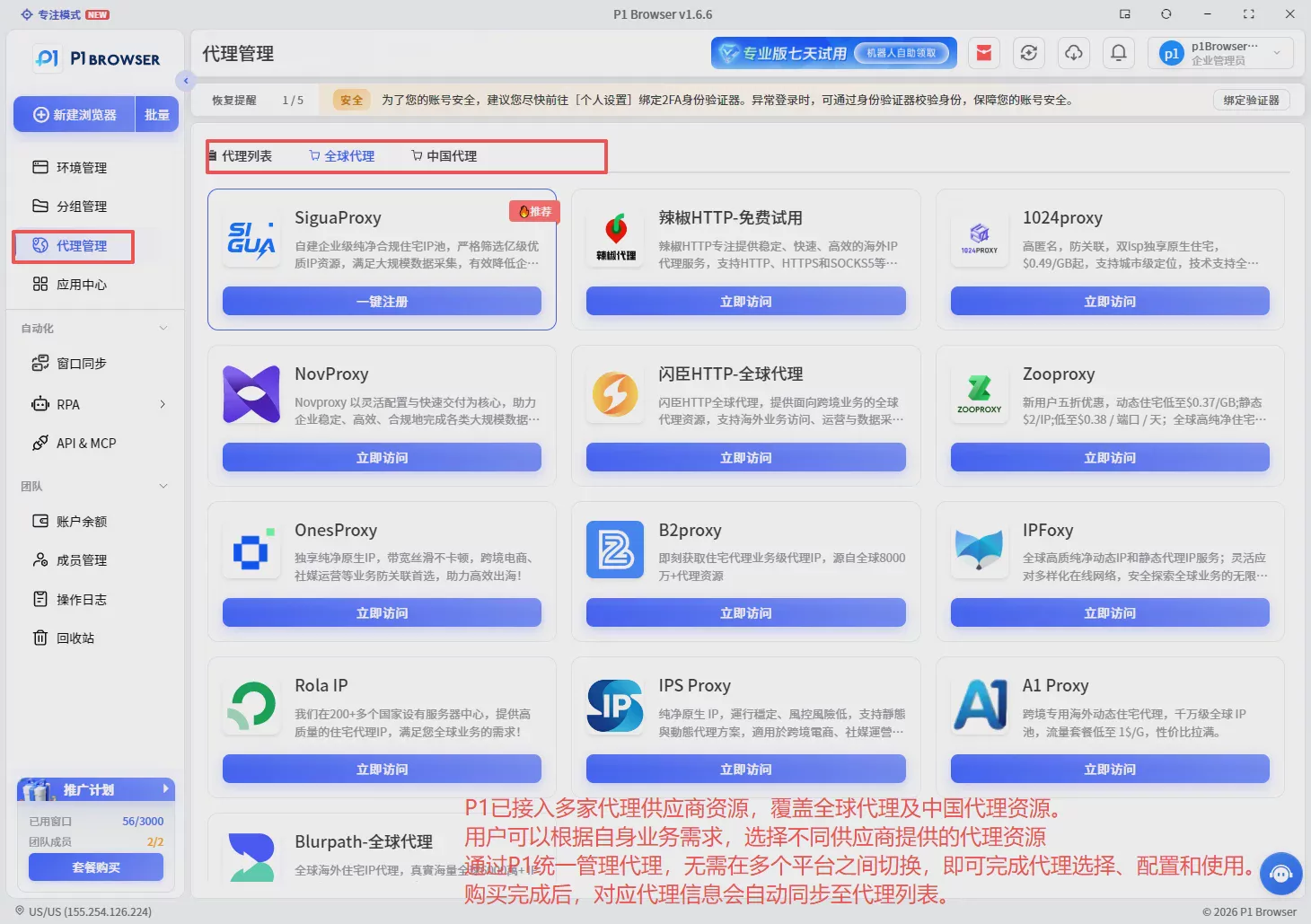
Team Collaboration
Built-in member grouping and hierarchical permission management functions support sharing of environment profiles and resources. Operations staff focus on content, while administrators centrally manage account permissions.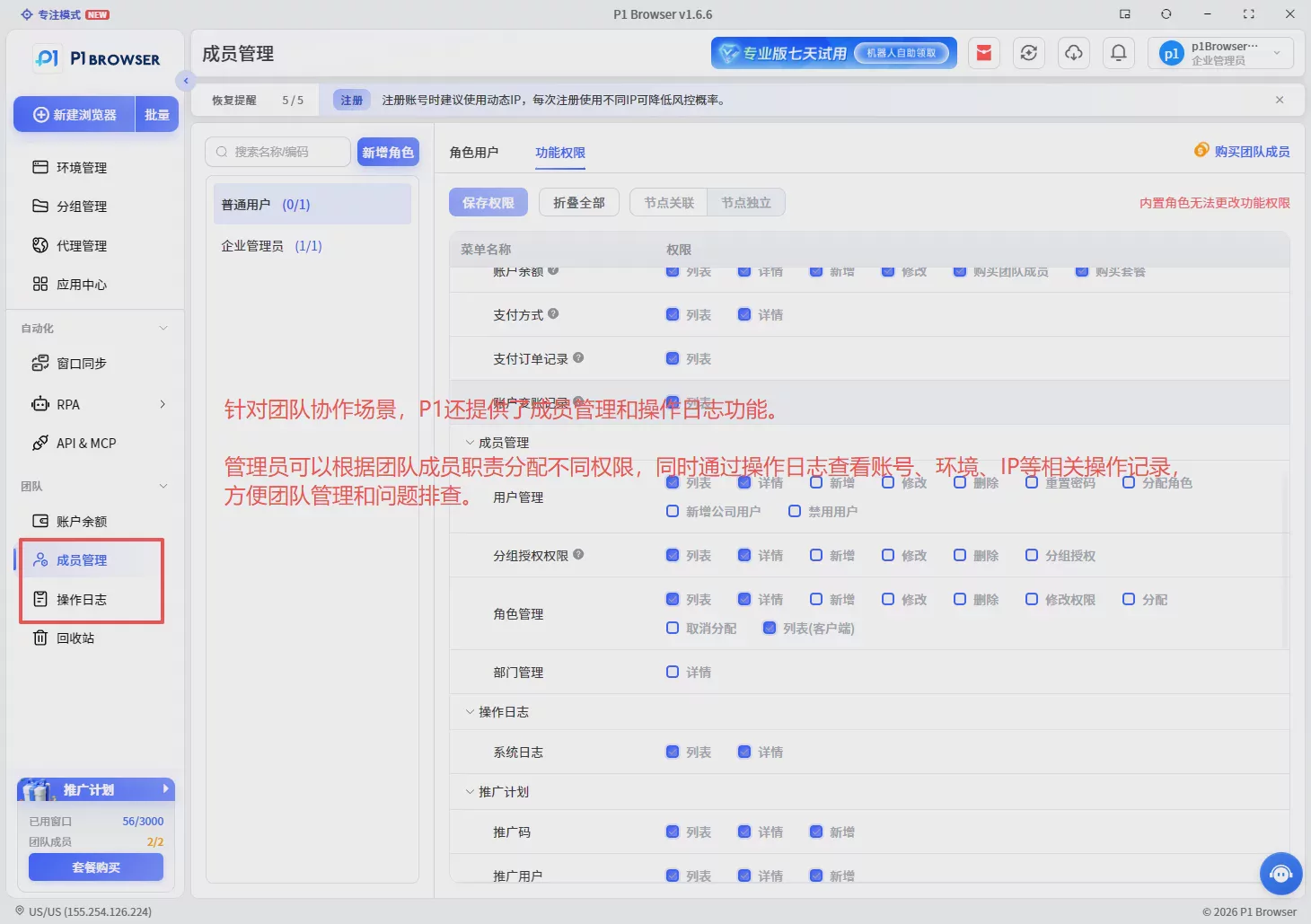
This forms a complete operations workflow:
Conclusion: proxy IP quality determines account operation stability
A proxy IP is not qualified just because it “can connect.” A proxy truly suitable for overseas business operations must simultaneously meet the following conditions:
- IP information is authentic;
- risk records are normal;
- the network environment is stable;
- and it matches the business scenario.
For teams operating overseas accounts on platforms such as Amazon, YouTube, and TikTok, proxy IPs are only the foundation. To maintain stable long-term operations, teams also need to incorporate independent browser environment management.
By testing proxy quality in advance and using P1 fingerprint browser to manage different account environments, teams can build a more stable and secure overseas operations system.
If you're also managing multiple overseas platform accounts and need to configure an independent, stable browsing environment for each account, visit the P1 Fingerprint Browser official website (www.p1go.com) to learn more.
Try P1 for free