


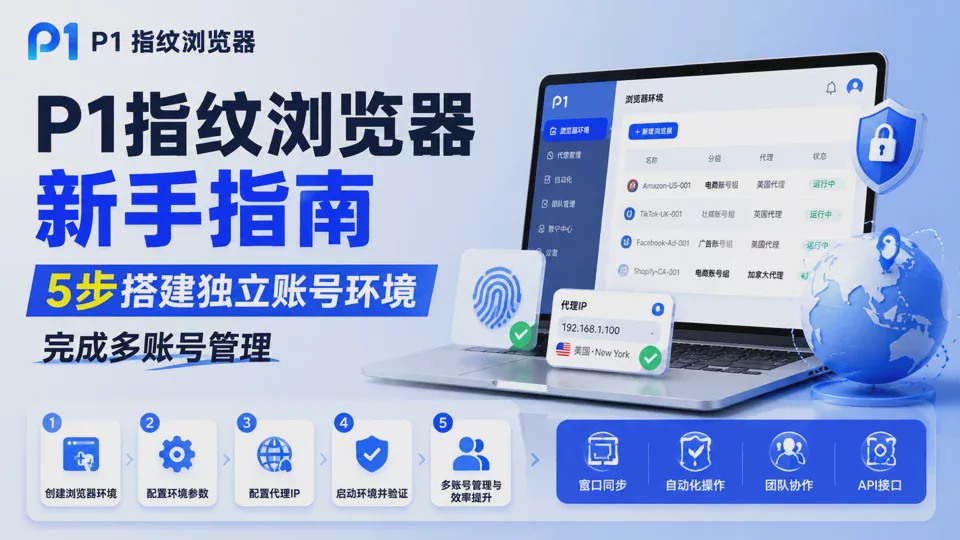
When operating multiple overseas accounts, many anomalies are not caused by account operation issues, but by the failure to properly manage the account operating environment independently.
For example:
- An Amazon store has just started operating and does not yet have stable orders, but receives an association risk alert;
- Multiple TikTok accounts log in from the same computer, and some accounts encounter abnormal verification;
- Team members manage accounts together, and the browser environment is chaotic, leading to repeated logins and frequent verification.
Websites not only identify account information, but also comprehensively evaluate environmental data such as browser fingerprints, Cookies, device parameters, and network IPs.
If multiple accounts share the same set of environmental parameters, the platform may use this environmental information to comprehensively assess the association between accounts.
Therefore, for users who need to operate multiple overseas accounts over the long term, a stable, independent browser environment is very important.
By creating independent operating environments for different accounts, P1 Fingerprint Browser helps users manage browser configurations across accounts, while supporting features such as proxy configuration, fingerprint parameter management, window synchronization, automation, and team collaboration.
Step one: Create a browser environment
After logging in to the P1 backend, go to the [Browser Environment] page.
Click [New Browser] in the upper left corner to start creating a new environment.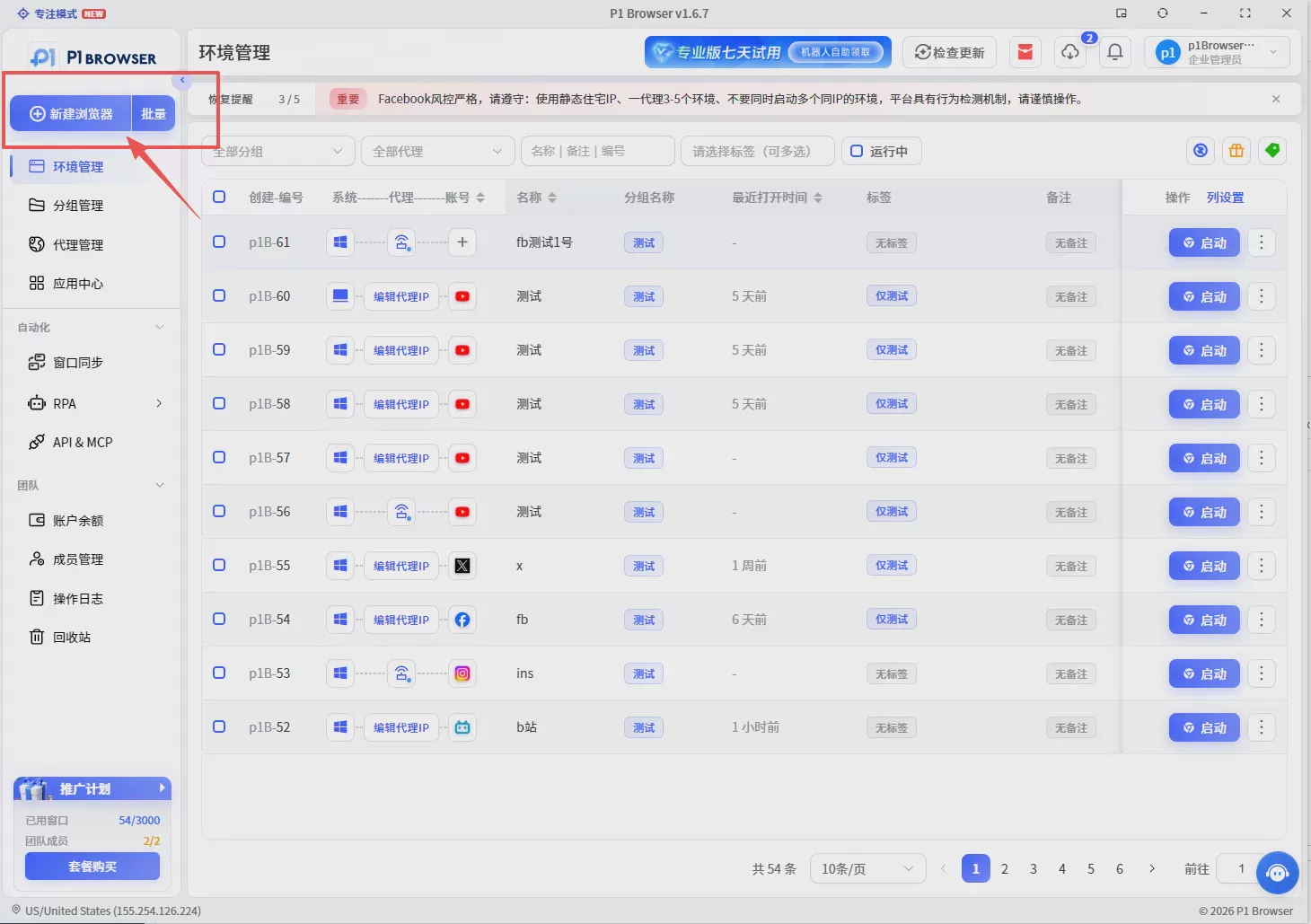
Set the environment name
It is recommended to name it based on the business scenario, for example:
- Amazon-US-001
- TikTok-UK-001
- Facebook-Ad-001
In addition to the platform name, you can also include region or purpose information. For example, Amazon-US-001 and Amazon-UK-001. This way, when viewing the environments later, you can quickly determine the region and purpose of the corresponding account.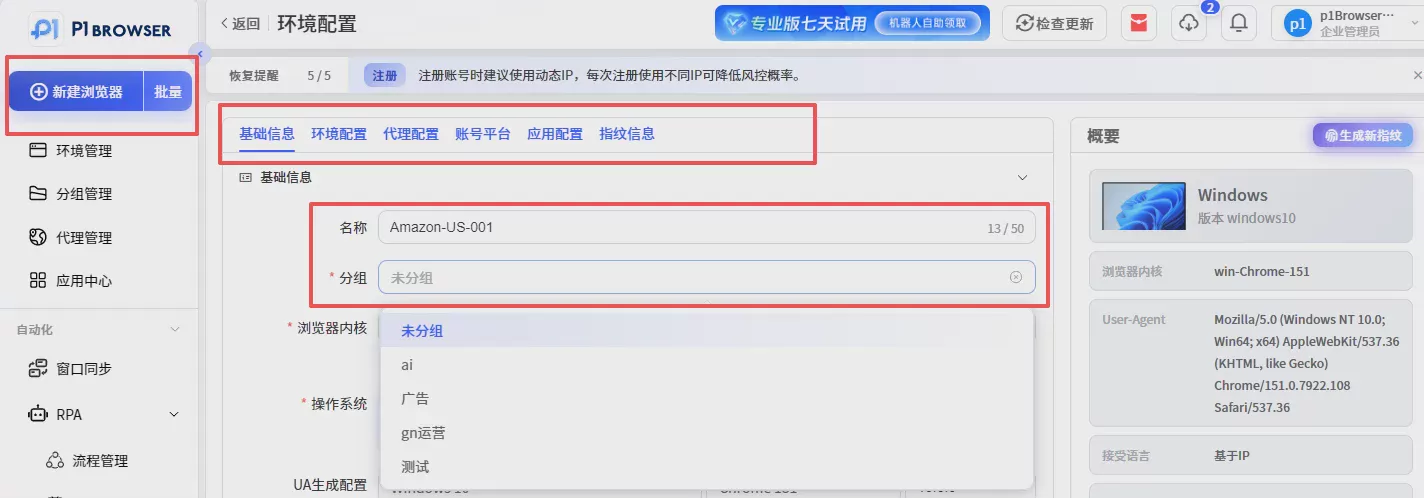
Create Environment Groups
If you need to manage accounts on multiple platforms, you can create groups in advance, for example:
- E-commerce Account Group
- Social Media Account Group
- Advertising Account Group
Group-based management can make a large number of browser environments clearer and easier to find and maintain later.
P1 runs on the Chromium core, and the system automatically manages browser versions. No additional download or installation is required; once created, it can be used directly.
Second Step: Configure Browser Environment Parameters
After creating an environment, you need to set the corresponding environment parameters; together, these parameters form an independent browser environment.
Operating System
P1 supports multiple system environments such as Windows, macOS, and Linux, which you can choose based on your target business needs. For example:
- If you mainly operate a platform for Windows users, you can choose a Windows environment;
- If you need to simulate a Mac device environment, you can choose macOS.
User-Agent
User-Agent contains device information such as browser version and system type. P1 automatically generates matching parameters based on the environment, and in most cases you can keep the default configuration. Unless there is a clear business need, it is not recommended to modify browser parameters frequently.
Cookie Settings
If you have existing accounts that need to be migrated, you can quickly complete environment migration through the Cookie import feature.
How to do it: Go to the environment configuration page → find the Cookie settings area → paste the existing Cookie data → save the configuration.
For example: if an account previously always logged in using the Chrome browser and is now migrated to a P1 environment, using Cookies can reduce repeated login steps and improve account migration efficiency.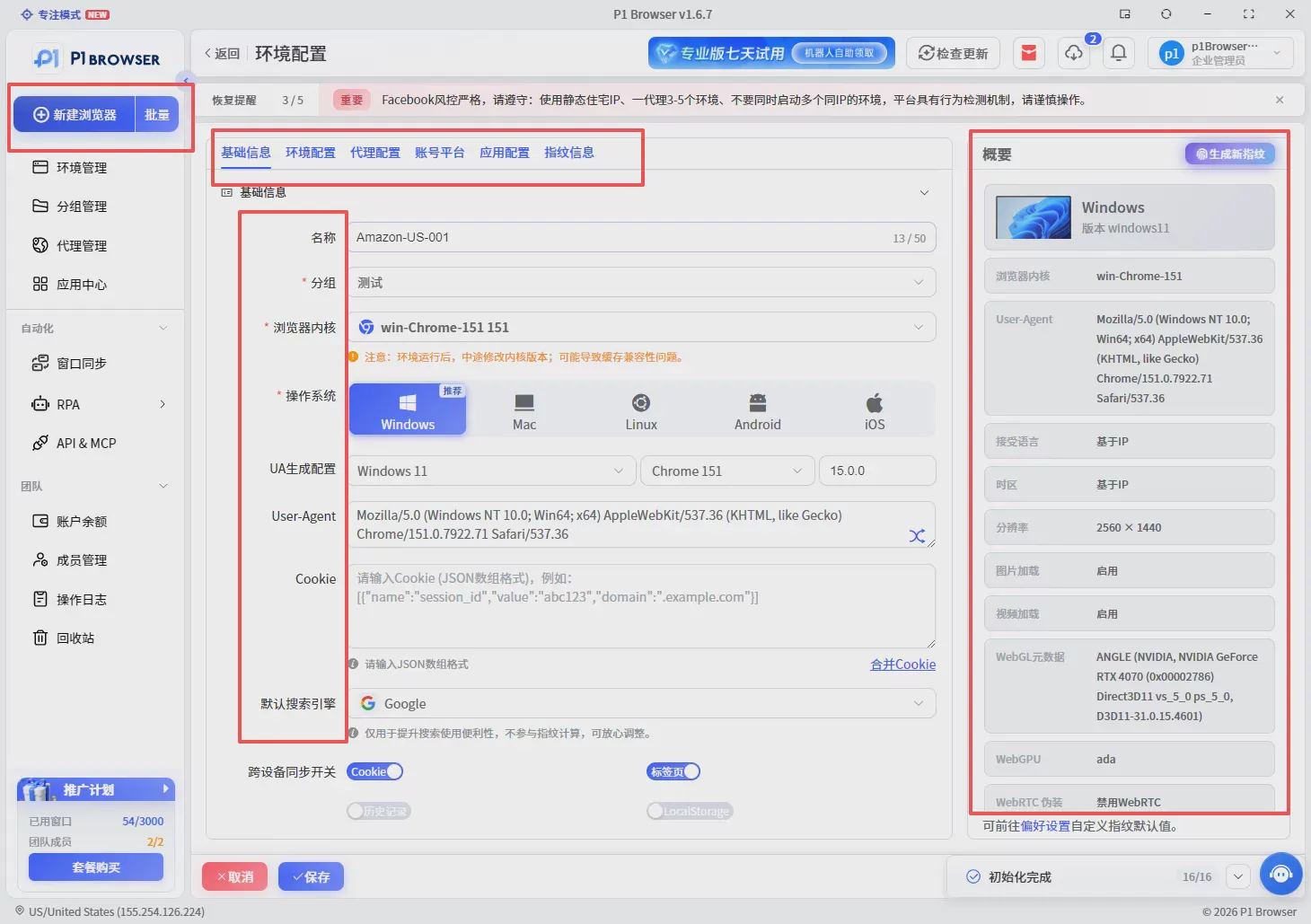
Step Three: Configure Proxy IP
The stability and quality of the proxy IP affect the network environment performance during account access.
When choosing a proxy, it is recommended to pay attention to IP region, stability, and availability.
In overseas account operations, the network environment is also an important part of the browser environment.
P1 supports two proxy configuration methods.
Use an Existing Proxy
If you have already purchased proxy resources, you can enter the proxy type, IP address, port, username, and password, and after completing the configuration, bind it to the corresponding browser environment.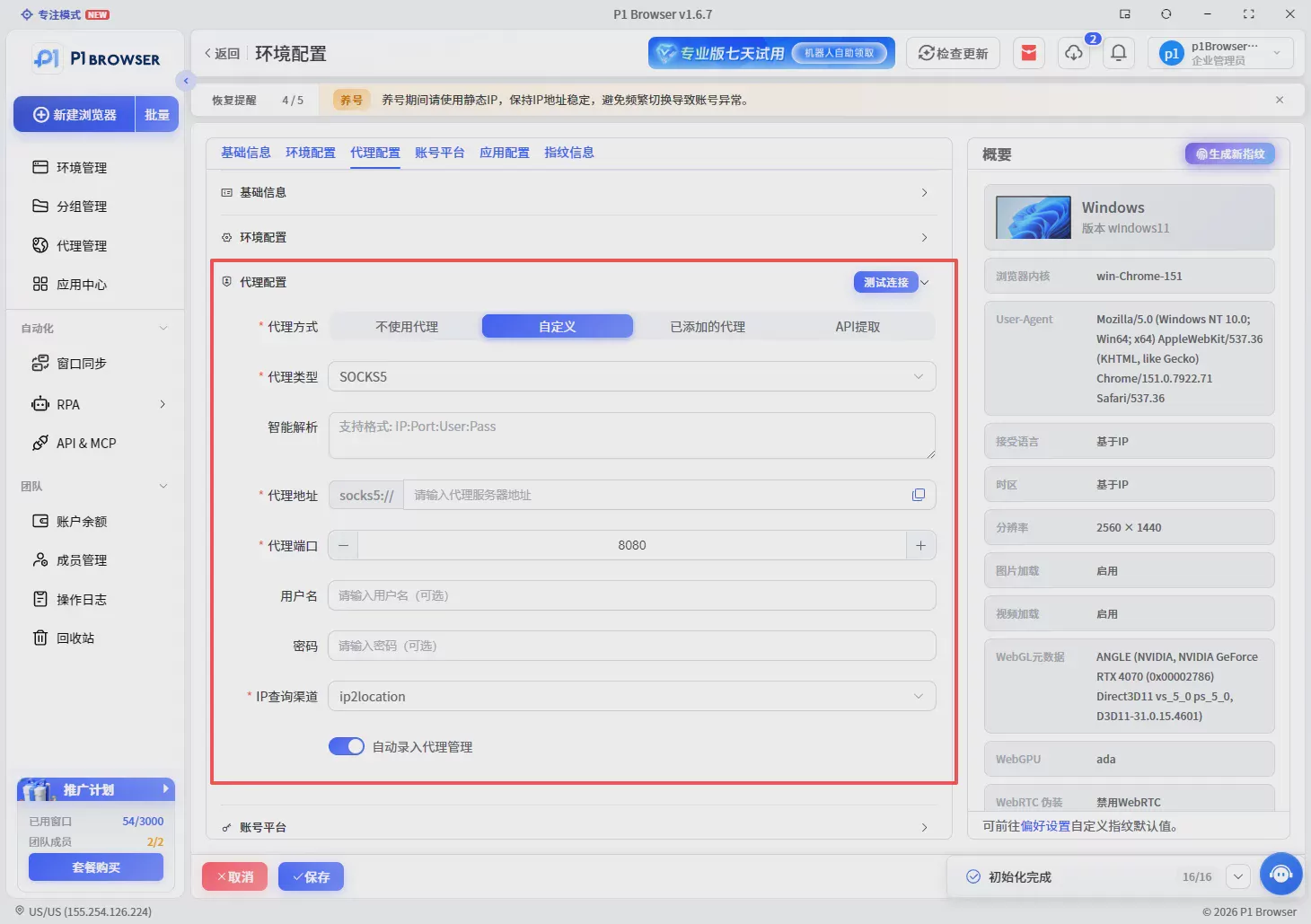
Use P1 Proxy Service
If you do not have proxy resources, you can also select directly from the P1 proxy management page.
P1 has integrated resources from multiple proxy providers, covering global proxy and China proxy resources.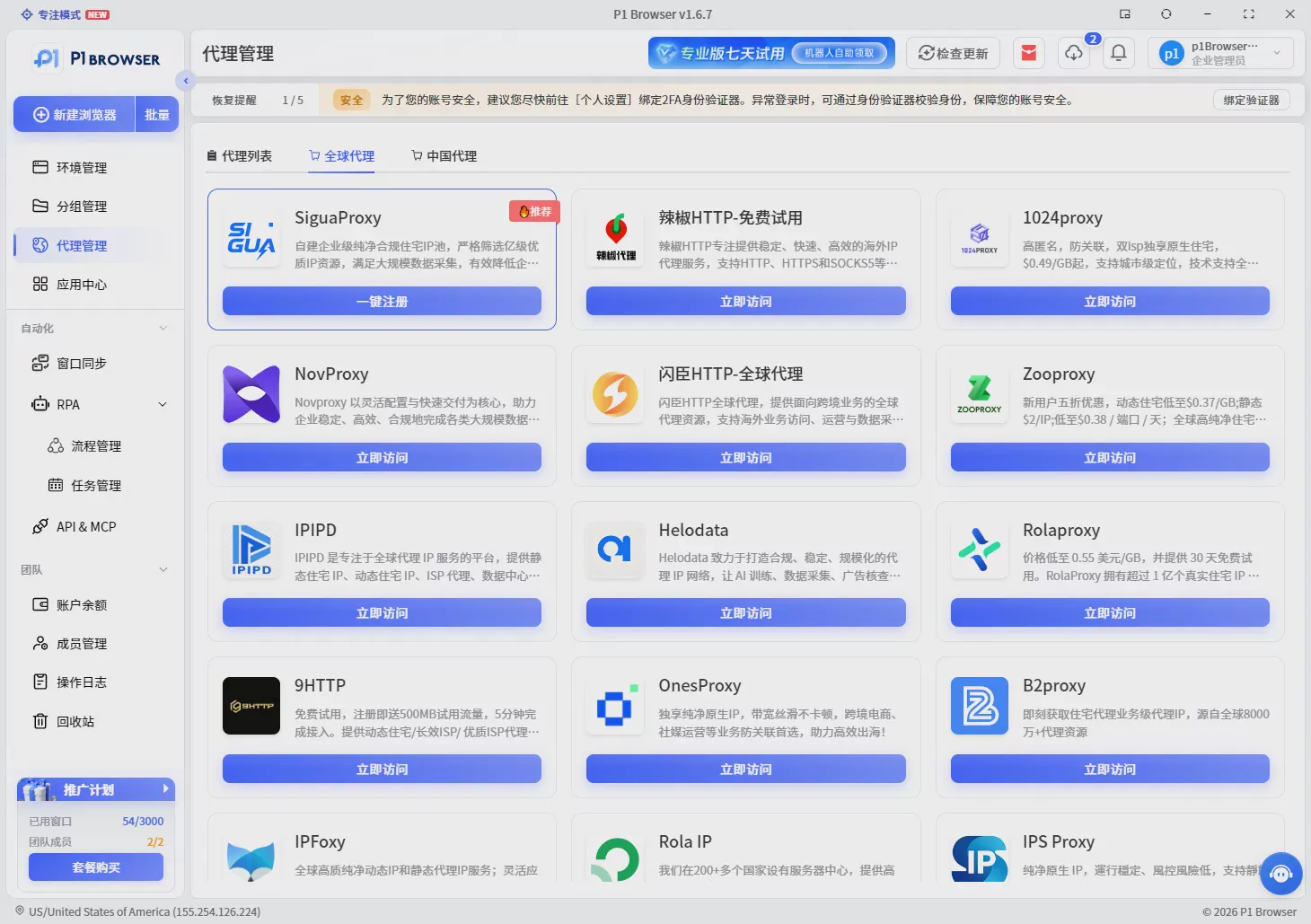
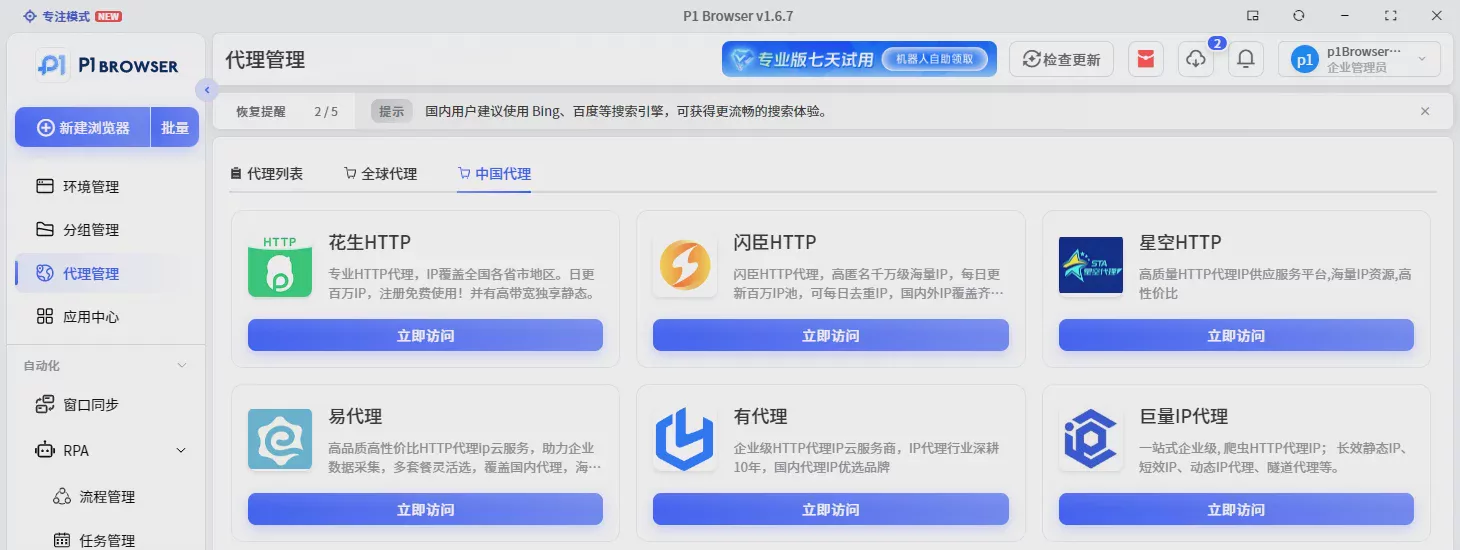
Users can choose proxy resources provided by different providers based on their own business needs, including IP services from different regions and of different types.
With unified proxy management through P1, you can complete proxy selection, configuration, and usage without switching between multiple platforms.
After the purchase is completed, the corresponding proxy information will be automatically synced to the proxy list.
Select the proxy you need to use to quickly complete browser environment configuration.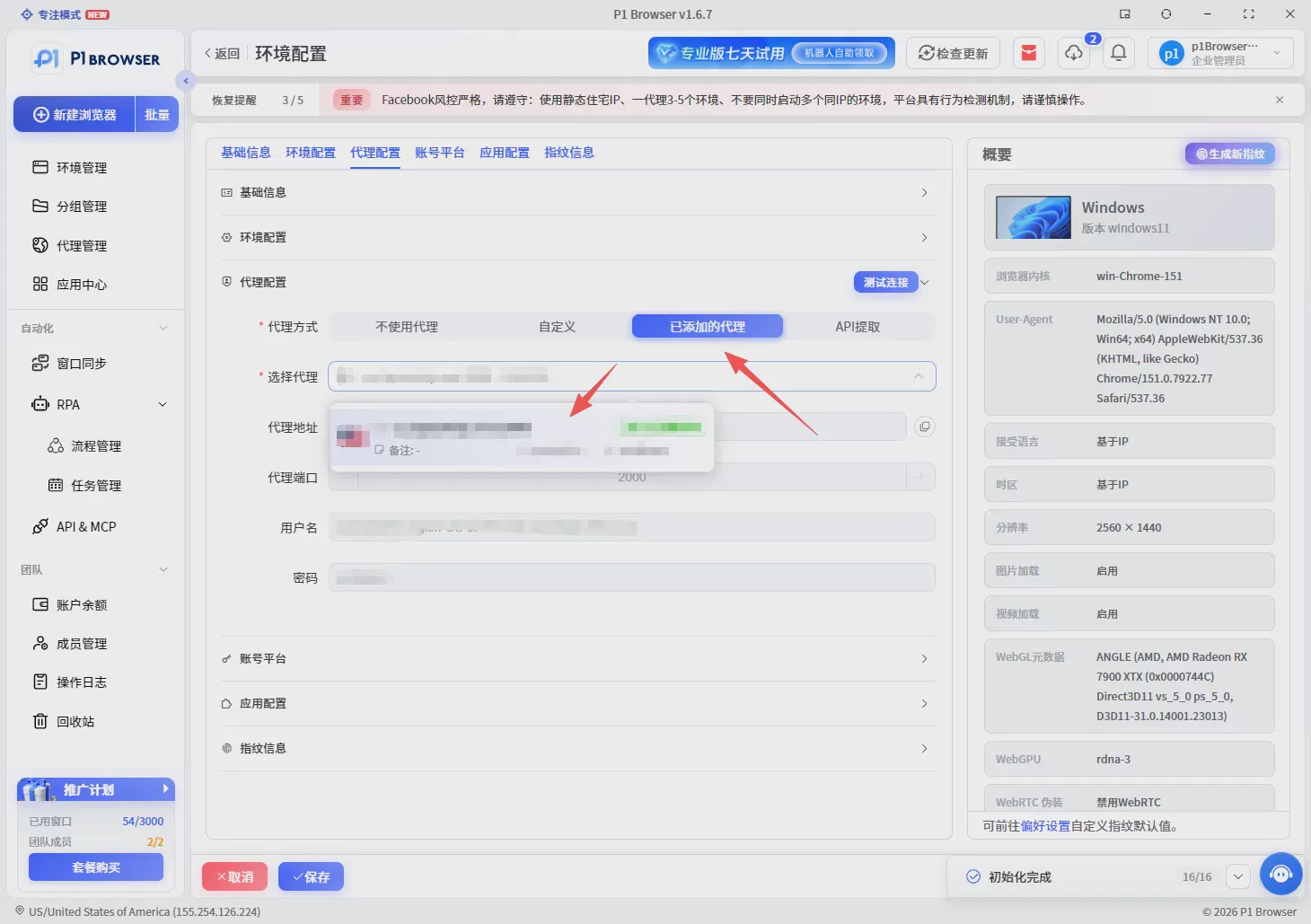
At the same time, on the proxy management page, users can also view and manage configured proxy resources in a unified manner, including proxy status, usage, and other information.
Fourth Step: Fingerprint parameter settings
P1 provides multiple browser environment parameter settings,
including language, time zone, fonts, and other browser environment characteristics. For most users, keeping the default configuration is sufficient.
Among these, users can select the language parameter based on their target business region.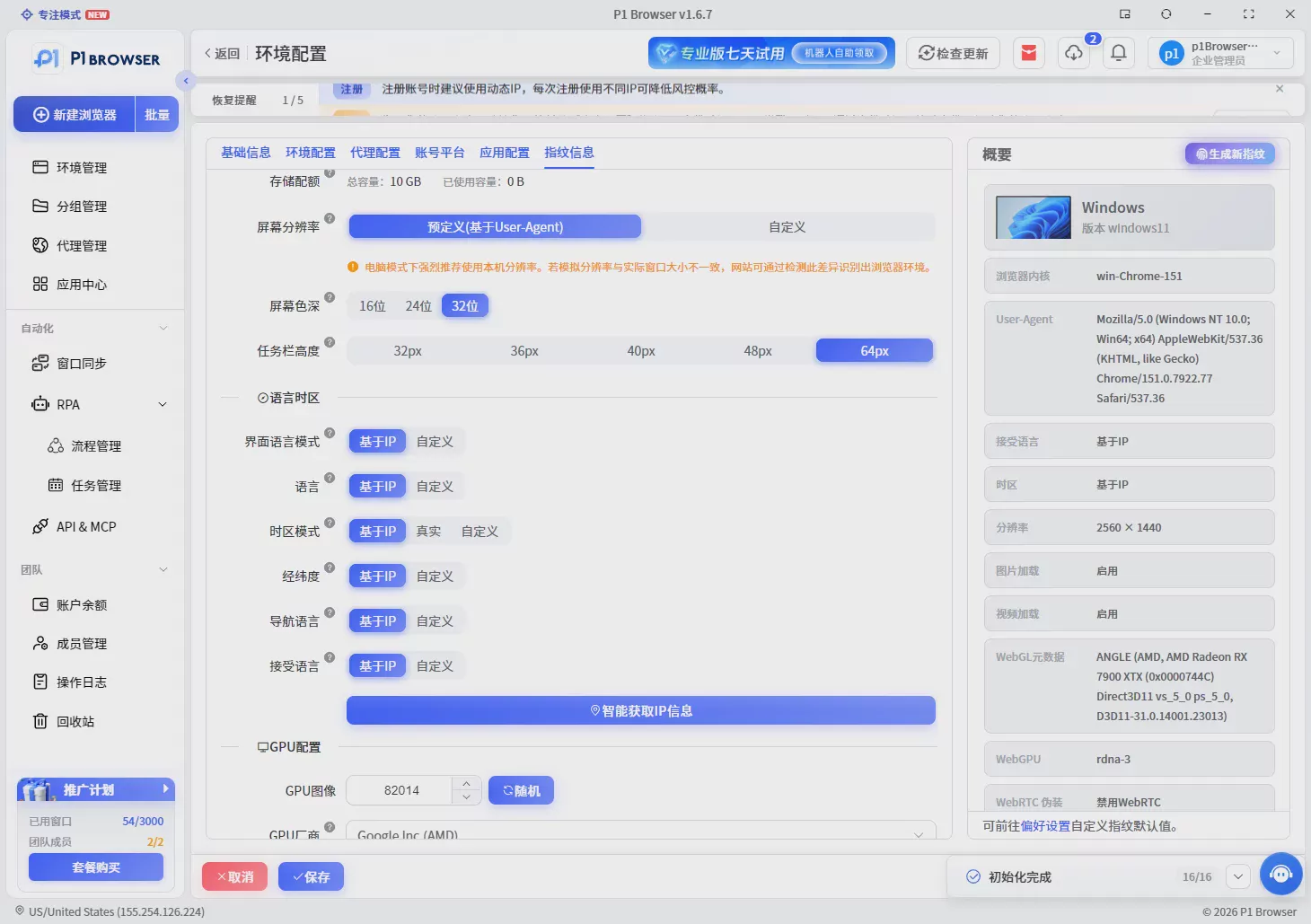
P1 supports hundreds of browser environment language configurations, covering the needs of different countries and regions and helping users create browser environments that better match their target markets.
With that, a browser environment is created.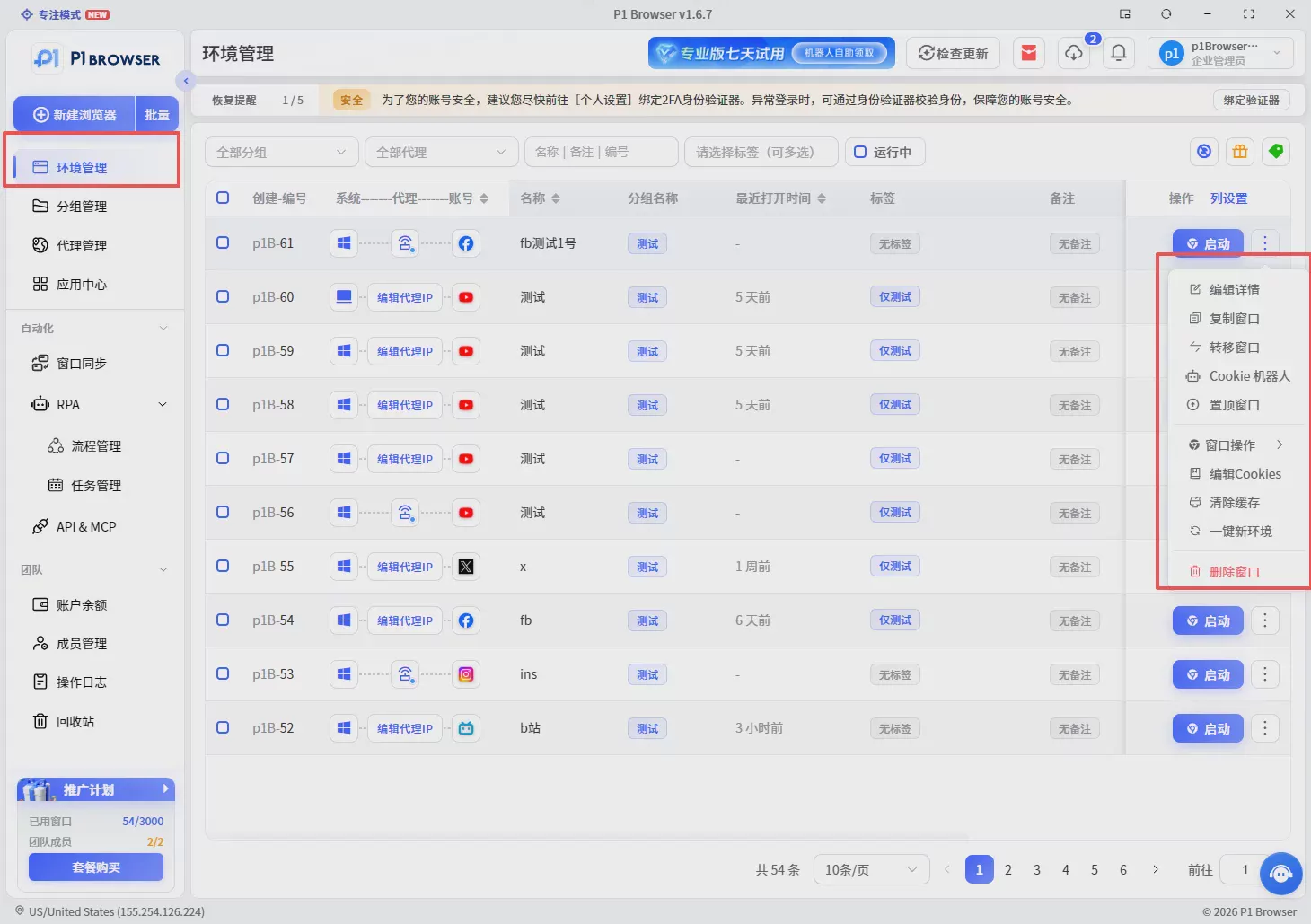
After a browser environment is created, it can be managed centrally on the Environment Management page.
Users can view the environment information, the group it belongs to, and its current status.
At the same time, P1 supports operations such as editing environment configurations, copying windows, and transferring windows, making it convenient for users to flexibly adjust and manage browser environments according to business needs.
Fifth step: Use P1 for multi-account management
After completing the basic configuration, you can use more P1 features to improve account management efficiency.
Window synchronization
When you need to operate multiple browser environments at the same time, you can enable window synchronization.
For example: when operating 5 Amazon stores at the same time and needing to upload the same batch of products to multiple stores. After enabling window synchronization, you only need to complete the operation in one window, and the remaining synchronized windows can perform the same operation.
When opening multiple store backends at the same time, checking orders in batches, or performing repetitive page operations, it can reduce the time spent operating one by one and improve management efficiency.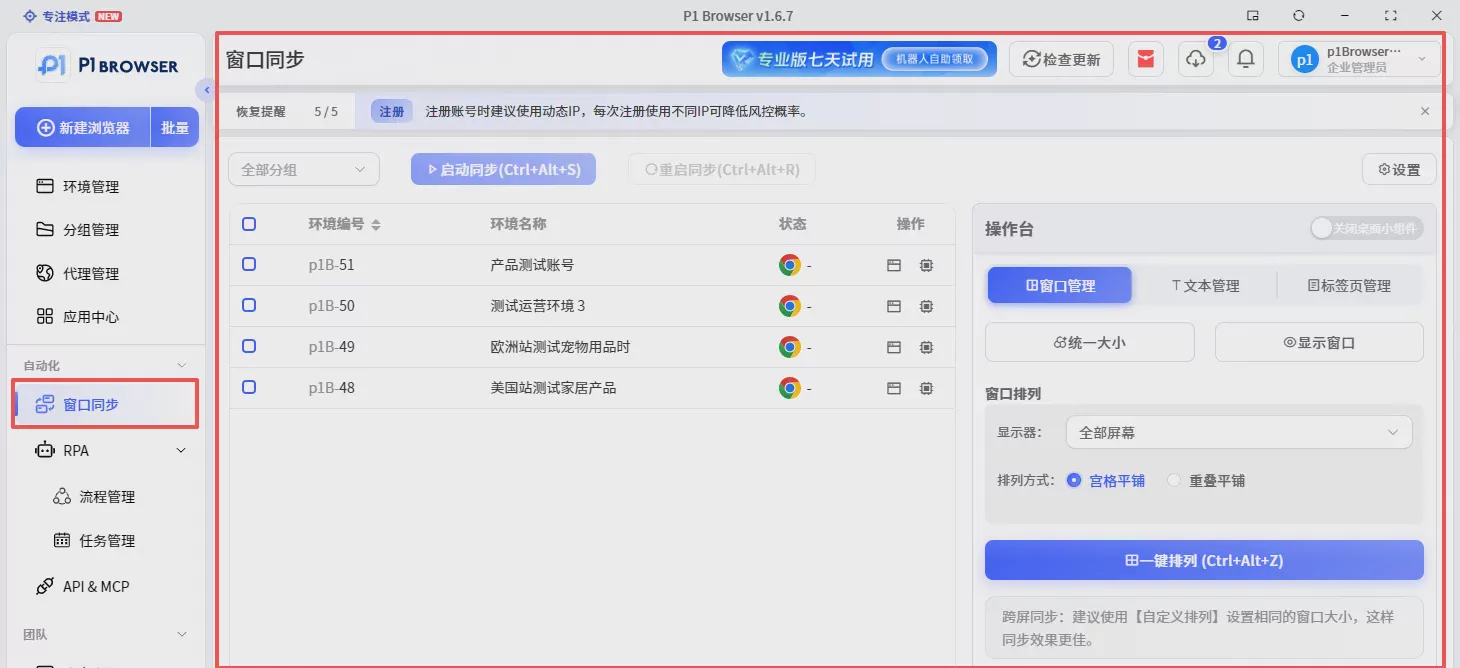
Automated operations
For repetitive browser tasks, automation features can reduce manual operations.
For example: fixed-process operations, repetitive page operations, batch task processing, etc., reducing the cost of repetitive manual operations.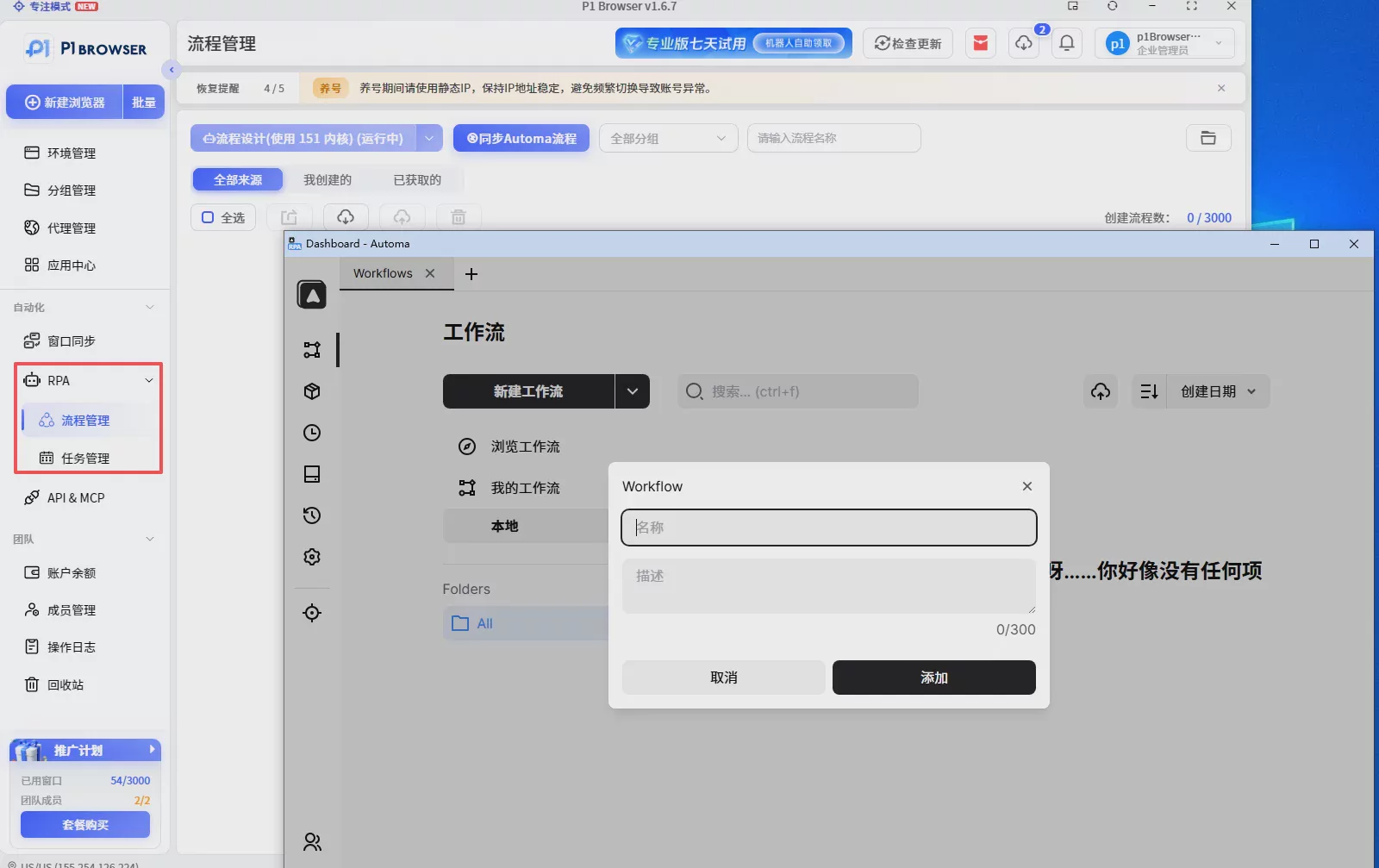
API Interface
If an enterprise team has systematic management needs, it can connect to business systems through the API interface to automatically create environments, manage browsers in batches, automate business processes, and more, meeting more complex operational needs.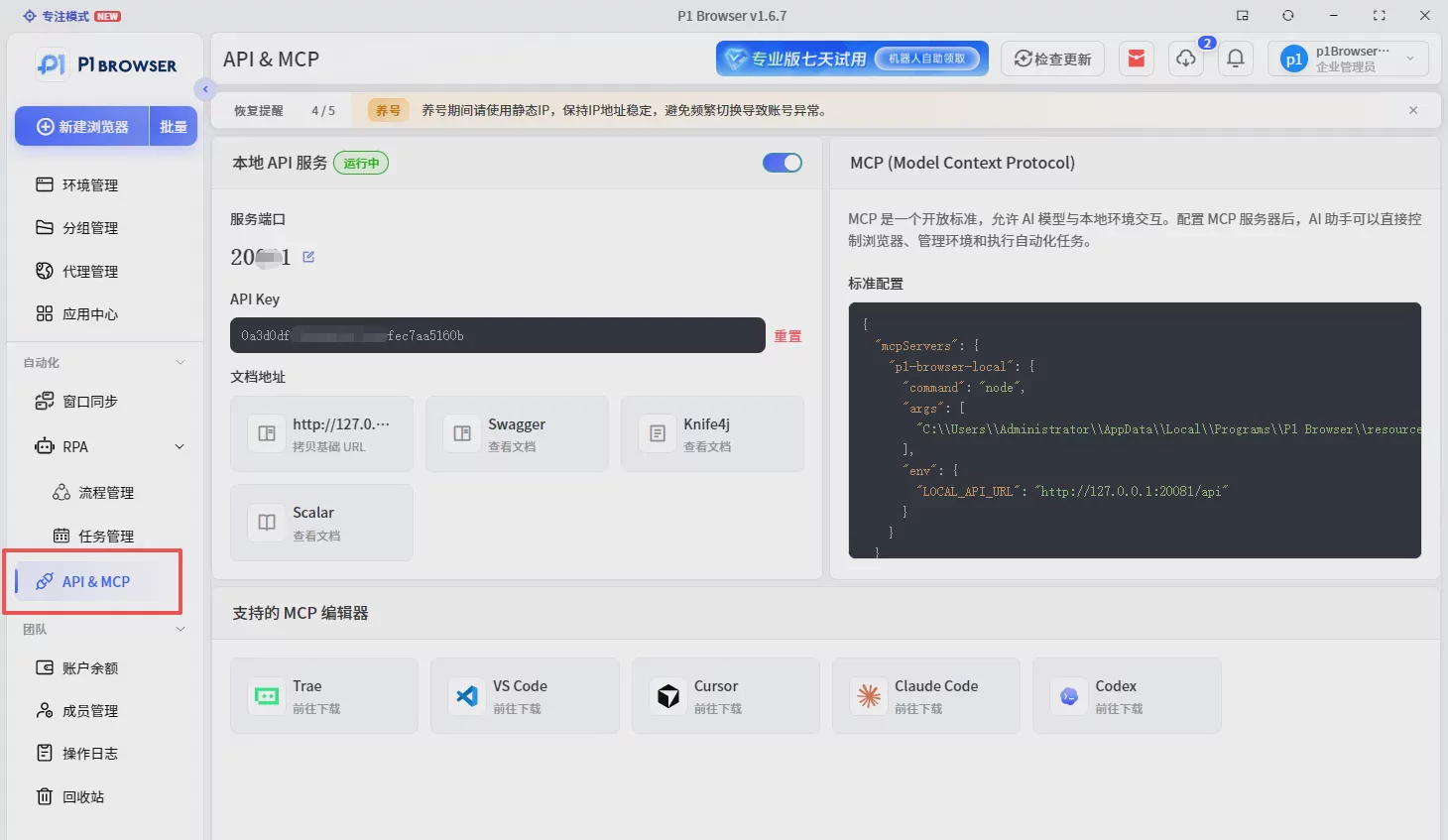
Team Permission Management
When multiple people operate accounts together, permissions can be assigned through the member management function.
Administrators can:
- Create member accounts
- Set operation permissions
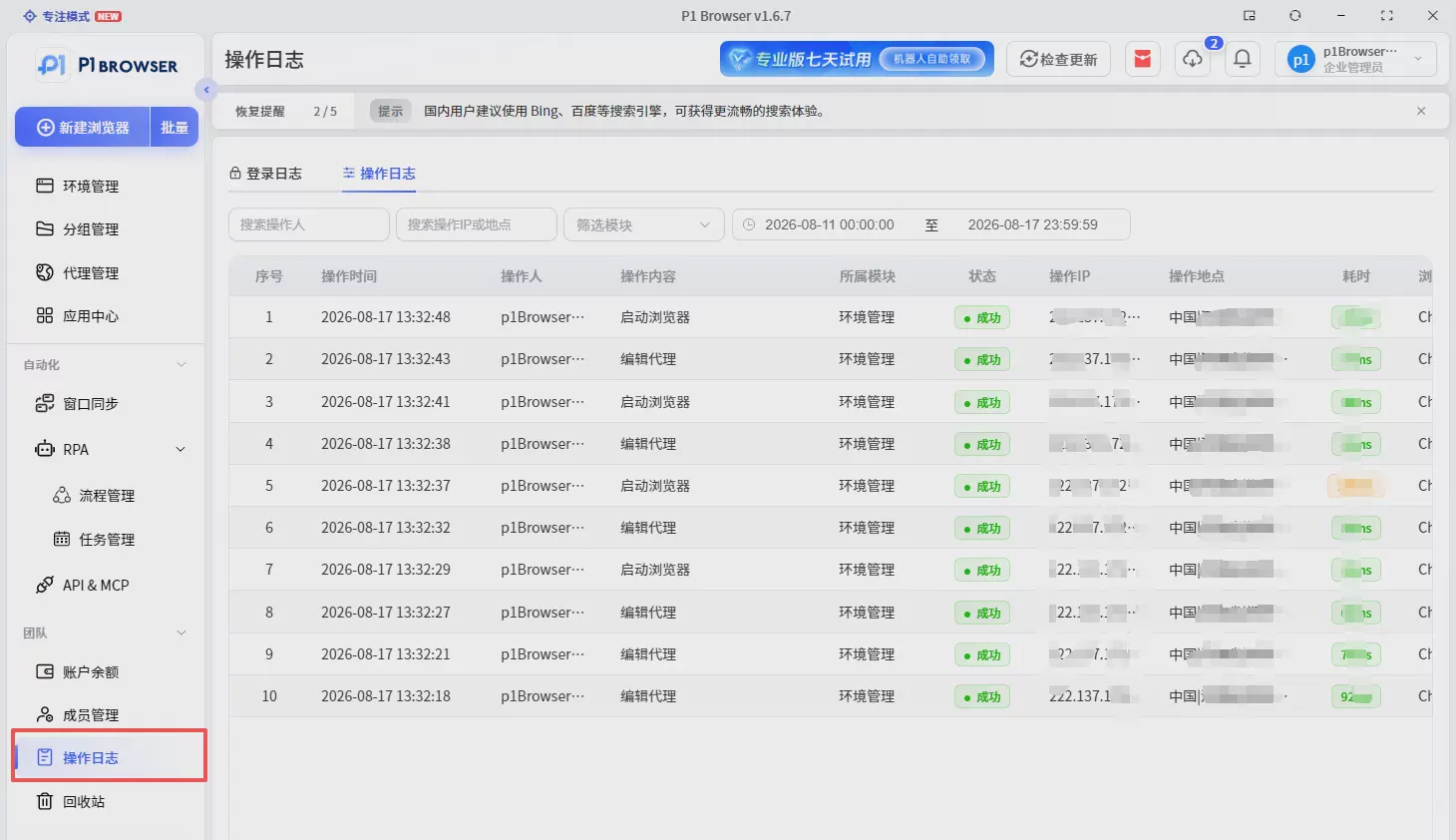
- View operation records
For example: operators only have account operation permissions, while administrators can centrally manage all account permissions, facilitating team collaboration while reducing account management risks.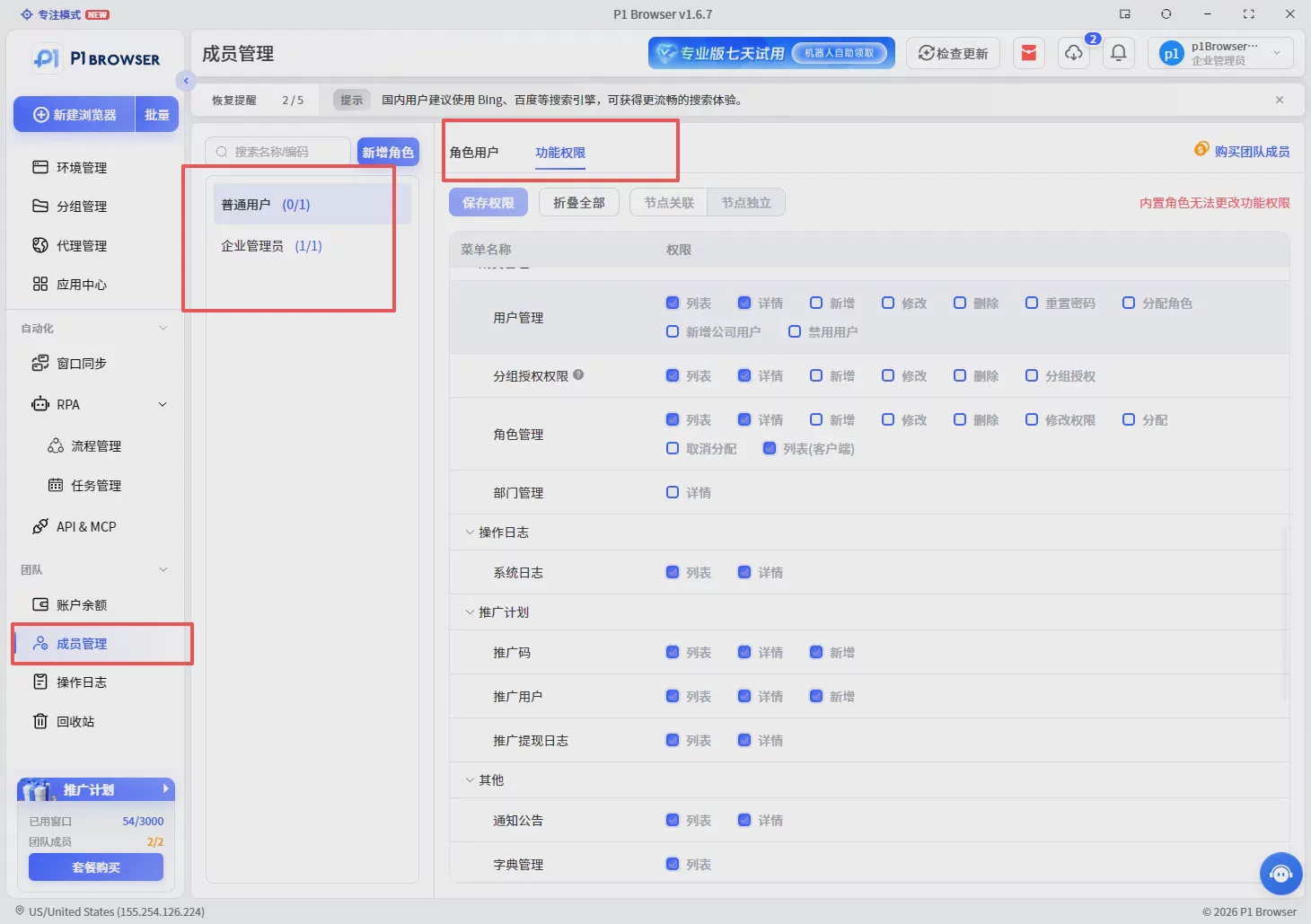
Summary
P1 Antidetect Browser not only provides browser environment creation features, but more importantly helps users establish a stable, independent account operating environment.
Through the 5 steps in this article, you can:
- Create an independent browser environment
- Configure browser parameters
- Set up proxy IP
- Verify the operating environment
- Managing multiple accounts
For cross-border e-commerce, overseas marketing, social media operations, and other scenarios, a stable browser environment is an important foundation for long-term account operations.
If you are managing multiple accounts on overseas platforms, you can try P1 Fingerprint Browser. Through independent browser environments, proxy configuration, team collaboration, and automation features, P1 helps individual users and enterprise teams manage multi-account operations more efficiently.
Try P1 Fingerprint Browser Now